


Retainers, Splints & TMJ Therapy in Shoreline, WA
You don’t have to have had braces here to be a patient here. If you’ve lost a retainer, if your jaw aches in the morning, or if you’re grinding through drugstore nightguards, come in and we’ll figure out what actually makes sense for you — no pressure, no sales pitch, at your pace.
Schedule a Free Consultation | Call or Text (206) 693-3123
Losing a retainer is not a moral failing. It happens
You spent months — maybe years — and real money getting your bite corrected and your teeth where they belong. That retainer is the thing that protects all of it, so when it disappears it’s not just a piece of plastic. It’s the safety net for a lot of hard work, and losing it genuinely feels bad. Here’s the reassuring part: after 17 years, Dr. Spain can tell you it happens to almost everyone eventually, and it’s usually one of the same four stories.
- The dog ate it. The single most common one. Retainers smell like you, they’re the right size to chew, and dogs are opportunists. Left on a nightstand or a coffee table, it’s only a matter of time.
- It got wrapped in a napkin. You take it out to eat, fold it into a napkin so it isn’t sitting on the table, and the server clears everything away. It’s gone before you’ve finished your entrée.
- It went in a pocket without a case. Then you sat down, or the pants went through the wash. Essix retainers are thin by design, so they crush easily.
- Some people just grind through them. If you clench or grind at night, you can wear a hole through a clear retainer in months rather than years. That’s not carelessness — it’s a sign we should talk about whether a plain retainer is the right appliance for you, or whether you need something built to take that force. If you’re in one of those groups, you’re in good company. Let’s just get your retainer replaced and back on track. As Dr. Spain says: in the case or in your face, no other place.
Three different appliances, three different jobs
People use these words interchangeably, but they aren’t interchangeable. Each one does a specific thing, and using the wrong one is how you end up frustrated and out of pocket.
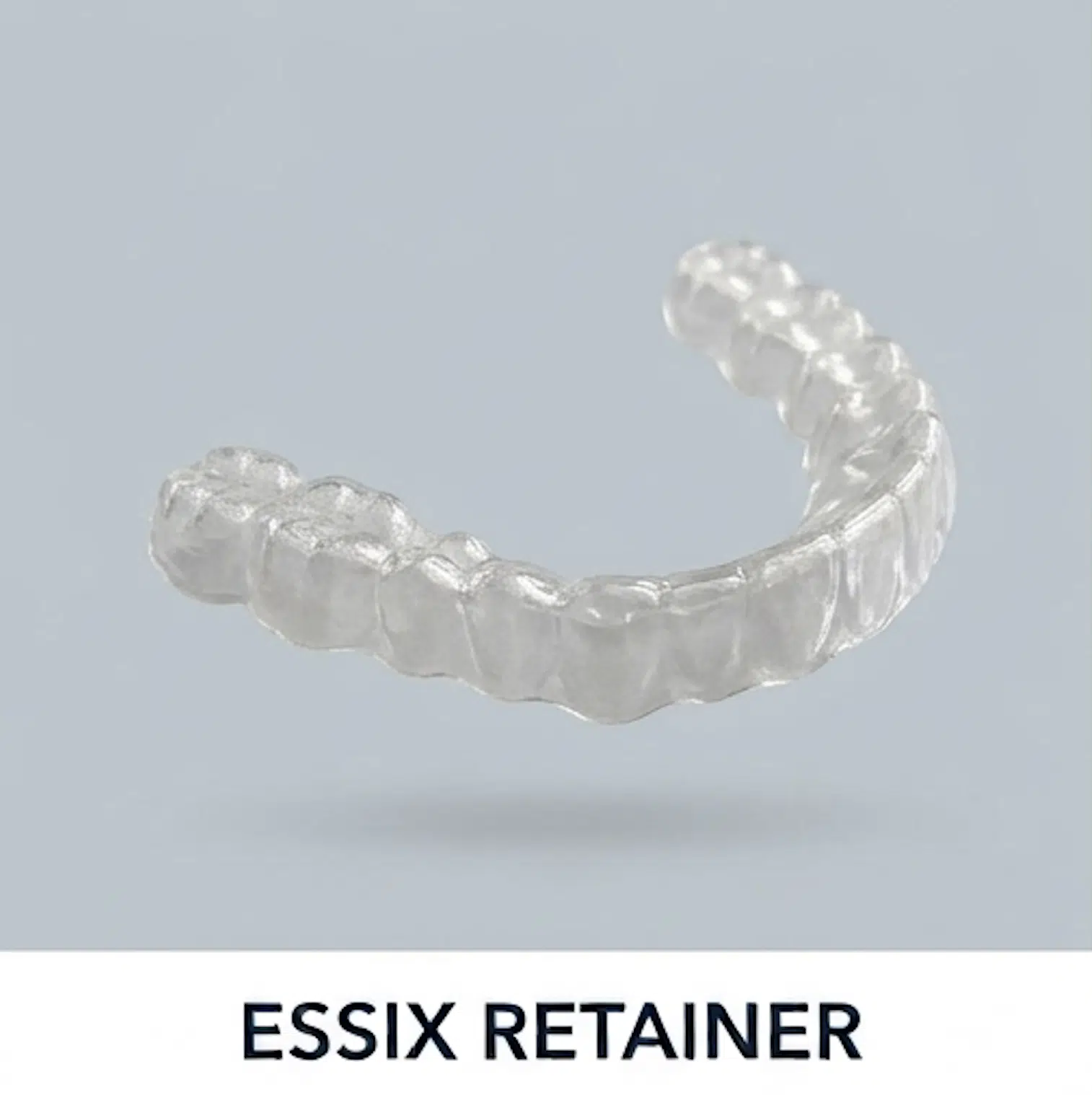
- Essix retainer — holds your teeth in place. The clear one. Thin, vacuum-formed plastic that fits over your teeth like a shell. Its job is holding — keeping every tooth exactly where we finished. It’s nearly invisible, comfortable, and easy to wear, which is why most people prefer it. What it isn’t is a grinding appliance; it’s too thin to absorb heavy clenching forces for long.
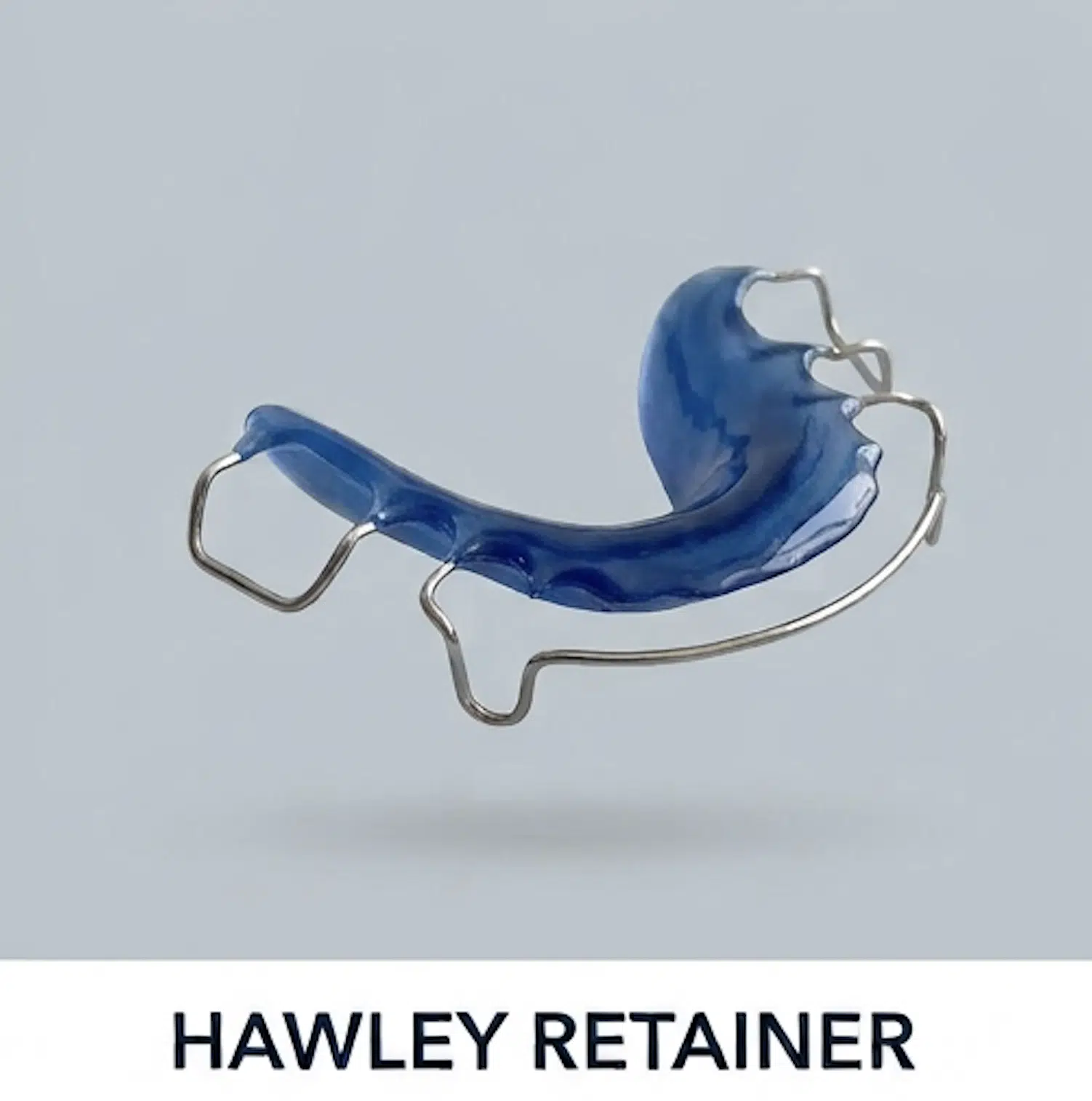
- Hawley retainer — holds everything in place and doesn’t cover the biting surfaces of teeth.The traditional one, with an acrylic body and a wire across the front. It’s more durable than an Essix, adjustable if a tooth needs a nudge, and it lets your back teeth touch eachother naturally, which matters for how your bite settles in. That last part is why a Hawley pairs with asplint — more on that below.
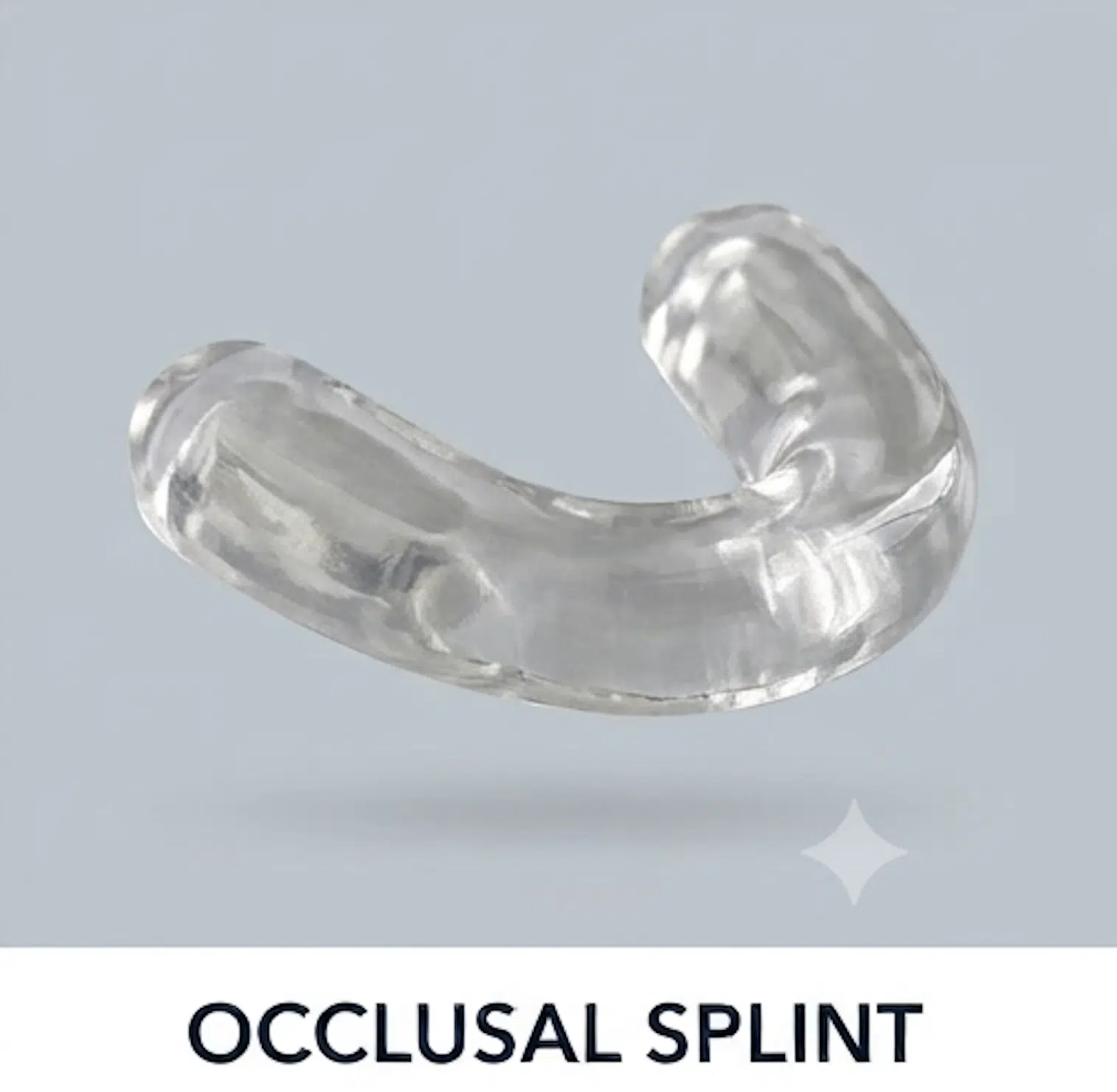
- Splints and Nightguards — treats the joint and the muscles and helps keeps teeth from moving. A splint is precisely built and adjusted so your jaw joints seat in a stable, repeatable position and your muscles get a chance to stop working overtime. This is what we use for TMJ symptoms: morning jaw soreness, headaches at the temples, clicking, popping, limited opening, and tension that never quite lets go. It’s not a bulk-bought mouthpiece — it’s fitted, adjusted, and followed over time. It also helps prevent damage to your teeth from grinding and is the best option for heavy grinders.


Why a splint should be paired with a Hawley
This part is easy to miss, so it’s worth explaining properly. A splint works by giving your teeth and jaw a precise, stable surface to close against, and every adjustment we make is aimed at getting your teeth to contact that surface evenly — so your joints rest where they should and your muscles can finally let go. That only works if it’s tooth to splint: actual enamel meeting the acrylic we’ve shaped. Put a clear Essix retainer on the opposing arch and you’ve broken how it works. You’re no longer biting tooth-to-splint; you’re biting plastic-to-plastic, through a layer of thin material that flexes and wears unevenly. Every careful adjustment is now filtered through a shim we can’t control, and the therapy stops doing what it was designed to do. A Hawley solves this because it retains from the inside. The acrylic body sits against the roof of your mouth or behind your lower teeth, the wire crosses the front, and the biting surfaces stay completely uncovered — so your teeth are held exactly where they belong and are still free to meet the splint directly. And here’s the part that makes the pairing work: the splint is retaining that arch, too. Worn nightly, a well-fitted splint holds those teeth just as a retainer would. So the splint retains one arch while doing its therapeutic job, the Hawley retains the other without interfering, and you get uninterrupted bite contact between them. That’s the combination — full retention on both arches and a clean tooth-to-splint bite. Neither appliance alone gets you both.
Straight answers on cost
We keep pricing simple and posted, because you shouldn’t have to ask three times to get a number.
Replacement Essix retainers
$200 per arch. Or, as our Debond-from-braces special, three upper and three lower sets for $600 — that’s $100 per arch instead of $200. Given the dog, the napkin, the pocket, and the grinding, having spares in a drawer at home is the least stressful way to own retainers, and most people who buy the package are glad they did the first time something happens. We also recommend keeping a set in your overnight bag because in the excitement to travel, many people forget to pack their retainers.
Replacement Hawley retainers
$500 per arch.
Splints
$800 per arch. This is ideally paired with a Hawley retainer to makes the therapy work. If you have Delta Dental, Concordia, or Aetna you may have a lower contracted rate depending on your plan and benefits. We are happy to check your benefits and submit a pre-authroization if you’d like.
What about insurance?
Splints and replacement retainers are sometimes covered, but coverage is genuinely spotty and varies plan to plan. Here’s how we handle it, plainly: we collect the full fee upfront and submit the claim to your insurance on your behalf, with any payment directed to you. If your plan covers some or all of it, that reimbursement comes to you, not to us. We do it this way so we’re never chasing a claim while you wonder what you owe — you know your cost the day you’re here, and anything insurance sends back is money coming back to you. We’re always happy to help you understand your benefits first.
What to do next
If a retainer is lost or broken, don’t wait it out. Teeth move fastest in the first weeks without retention, and a quick replacement is a very different conversation from starting over. If your jaw is the problem — soreness, clicking, headaches, tension — come in and we’ll take a tour of your mouth and see what’s going on together. Sometimes the answer is a splint, sometimes it’s something simpler, and we’ll tell you honestly either way. Learn a bit about Dr. Spain first if you’d like. También, hablamos Español.
Book Your Free Consultation Online | Call or Text (206) 693-3123